

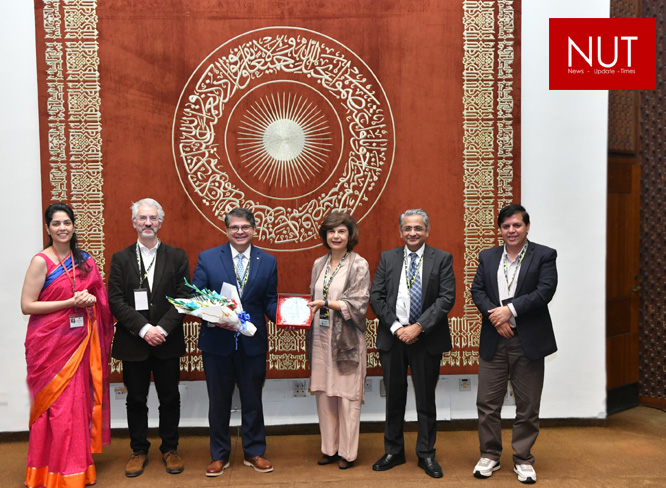
In a national first, the Aga Khan University hosted the Regenerative Medicine and Stem Cell Conference 2026 (RSC-2026) in Karachi. The conference brought together scientists, clinicians, policymakers, regulators, and industry representatives to exchange perspectives on recent advances in stem cell research, regenerative medicine, and tissue engineering, with a focus on Pakistan and comparable health care settings.
Regenerative medicine and stem cell science are rapidly reshaping how diseases are understood and treated worldwide, offering new possibilities for repair, recovery, and long-term care. For countries like Pakistan, where the burden of non-communicable diseases continues to rise, and health care systems face persistent constraints, these advances carry particular relevance.
“Regenerative medicine represents a shift from managing disease to restoring function,” said Syed Ather Enam, Conference Chair and Director of the Centre for Regenerative Medicine and Stem Cell Research at AKU. “This conference was conceived to place Pakistan within the global scientific conversation, while remaining grounded in our local realities. Our aim is to build knowledge, capacity, and collaboration that can translate into meaningful benefit for patients.”
RSC-2026 featured scientific sessions, panel discussions, and focused deliberations examining both opportunities and challenges in the field. Key areas included RNA-based gene transfer, stem cell–derived exosomes, regenerating damaged heart tissue, glaucoma care, liver fibrosis, and Alzheimer’s disease modeling to better understand the disease. Discussions emphasized strong scientific standards, ethical responsibility, and regulatory oversight, particularly in resource-limited environments.
“Building sustainable programs in regenerative medicine requires more than isolated discoveries,” said Azhar Hussain. “It requires strong systems, interdisciplinary collaboration, and alignment between science, regulation, and clinical need.” Echoing this sentiment, Sheerien Rajput noted that “capacity building is central to long-term impact.”
The conference was preceded by hands-on capacity-building workshops, introducing participants to foundational concepts and laboratory approaches in stem cell research and regenerative medicine, with the aim of strengthening local expertise and developing a skilled scientific workforce.
