







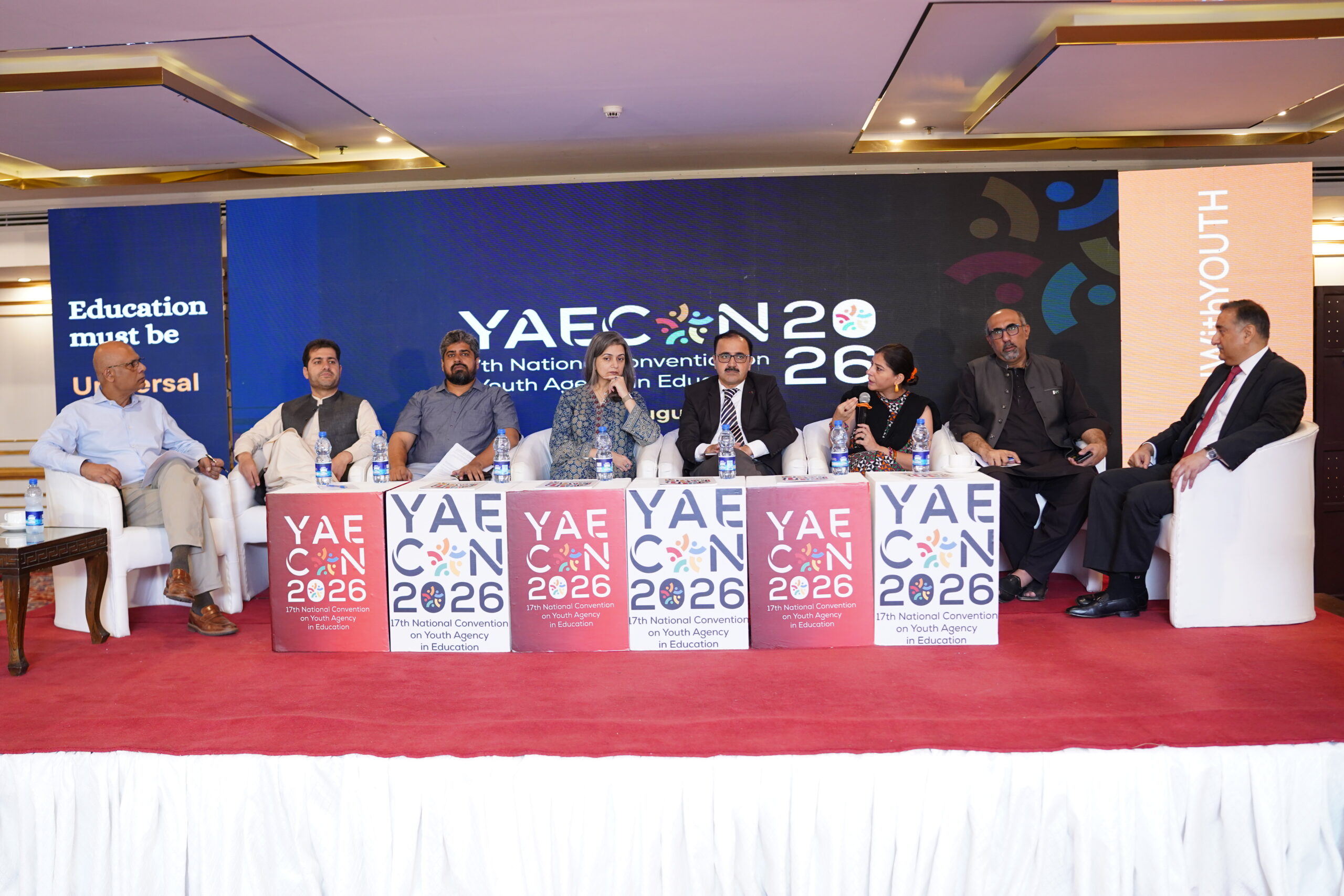
Young people must have a meaningful role in shaping education policies and systems that affect their lives, speakers said at the conclusion of the 17th National Convention on Youth Agency in Education 2026 in Islamabad today.
Organised by the Society for Access to Quality Education (SAQE), the two-day convention brought together young people, policymakers, education officials, civil society and development partners to explore how youth agency in education can move beyond participation towards meaningful influence and action.
A major milestone of the convention was the launch of the Pakistan Youth Agency Study, which identifies a youth-agency paradox in which the education system continues to treat young people as passive recipients, with limited engagement in the policy process.
Building on the study’s findings, young people presented a Youth Policy Statement, placing their perspectives directly into the policy conversation and calling for stronger mechanisms for youth participation in education decision-making.
These priorities were taken into a Grand Dialogue with provincial education officials, creating a platform to amplify youth voices and connect their recommendations with education policy and planning.
Zehra Arshad, Executive Director, SAQE, underscored that youth agency cannot be separated from the systems that shape young people’s opportunities. Meaningful participation requires responsive policies, equitable financing and inclusive, resilient education systems that enable every young person to learn, participate and shape their future.
Dr Fauzia Khan, Chief Education Advisor, Sindh Education and Literacy Department, stressed the need to create meaningful strategic pathways to embed youth participation within existing education policy architecture.
Ijaz Khalil, Advisor, E&SE Department, Khyber Pakhtunkhwa, shared that 500 virtual schools are being developed to address access gaps in rural areas, combining a virtual instructor with an in-person teaching assistant. He added that the schools will be solarised, equipped with internet connectivity, and incorporate safeguarding measures aligned with the National IT Policy.
Muhammad Tahir, Deputy Chief, Works and Infrastructure, Punjab School Education Department, shared that while the government is prioritising development funds for climate-resilient and disability-inclusive school infrastructure, young people are also being strategically engaged through school councils to help ensure that infrastructure investments respond to learners’ needs while strengthening their agency and leadership skills.
The convention also examined education financing as a critical determinant of whether young people can exercise their right to education. Maliha Hyder, Education Specialist, World Bank, called for a shift towards outcome-based financing driven by targeted strategies and reliable data, while highlighting the need to rethink curriculum delivery as climate-related disruptions increasingly result in lost learning days.
Aminullah, Additional Secretary, Balochistan Education Department, highlighted low population density and the high cost of education as persistent barriers to access, noting the potential of community schools to bridge the out-of-school children gap, with around 80% of 2,500 community schools already operational.
On disability inclusion, Munazza Gillani, Director, Sightsavers Pakistan and Middle East, highlighted gaps in social protection, noting that persons with disabilities may be forced to bear up to 90% of assistive device costs out of pocket.
Areebah Shahid, Executive Director, Pakistan Youth Change Advocates, highlighted the exclusion of juveniles in prisons from learning opportunities and called for greater attention to their education and skills development.


