





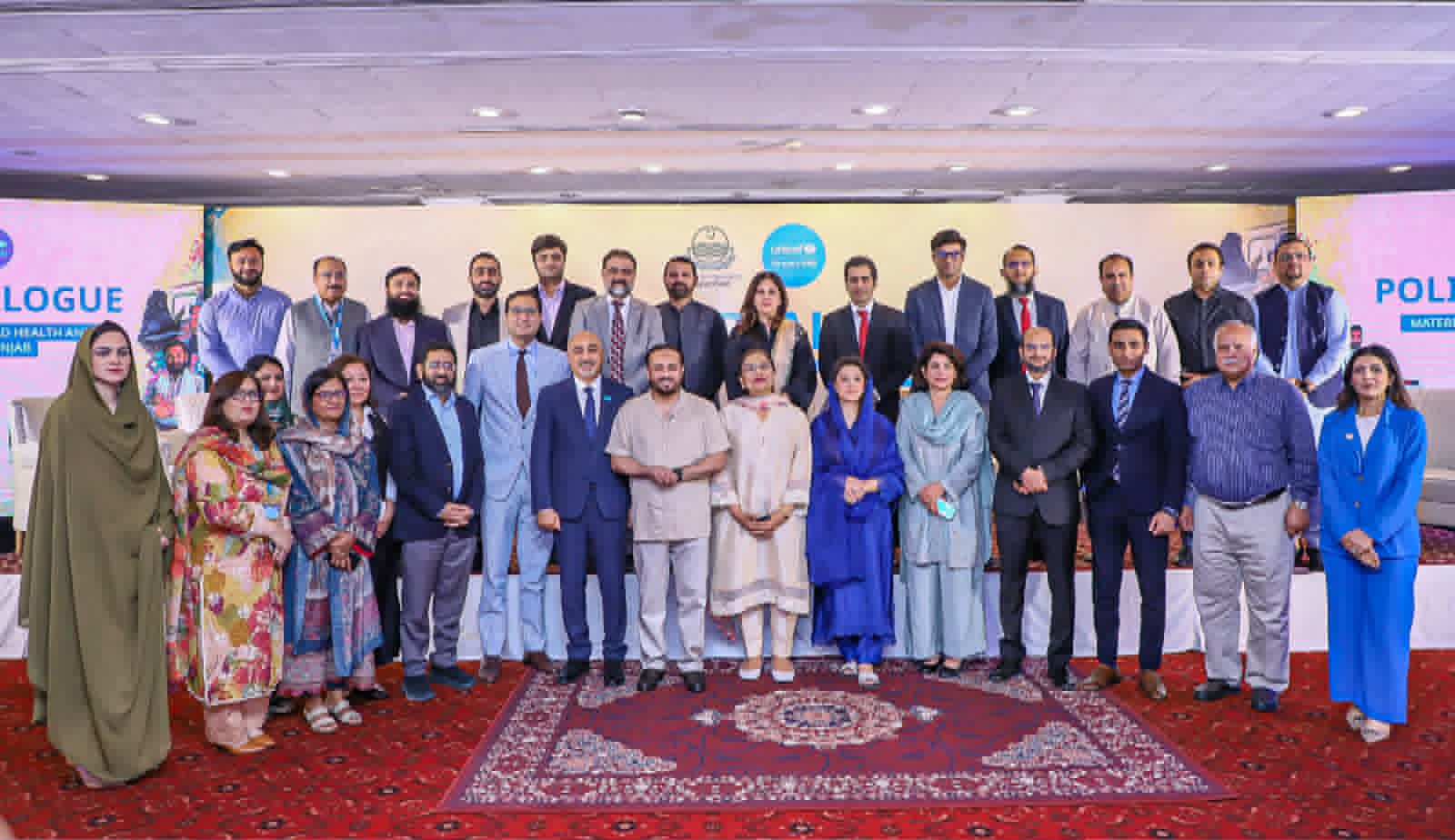
The Department of Health & Population, Government of Punjab, in collaboration with UNICEF Pakistan, convened a High-Level Joint Government-UNICEF Pakistan Policy Dialogue on Maternal Newborn Child Health and Nutrition in Punjab at Avari Hotel Lahore on Wednesday. The dialogue brought together senior government officials, development partners, academia, civil society representatives and health experts, including Punjab Minister for Health & Population Khawaja Imran Nazir, the Secretary Health & Population Department Ms. Nadia Saqib, and Ramiz Behbudov, Chief Field Office Punjab at UNICEF Pakistan to review the latest evidence on maternal and child health outcomes in Punjab and discuss coordinated policy actions to accelerate progress for women and children across the province. Speaking at the occasion, Minister for Health & Population Khawaja Imran Nazir reaffirmed the Government of Punjab’s commitment to strengthening healthcare systems and improving access to quality maternal, newborn and child health services across the province. He emphasized the importance of evidence-based policymaking, stronger community outreach and integrated healthcare interventions to ensure that no mother or child is left behind. Addressing participants, Ramiz Behbudov, Chief Field Office Punjab, UNICEF Pakistan, highlighted the importance of sustained investments in maternal and child health and nutrition, particularly for underserved and vulnerable communities. He noted that Punjab has made encouraging progress in key health indicators, including immunization coverage and antenatal care, but emphasized that collective action and stronger partnerships remain essential to address persistent gaps in quality, equity and continuity of care. The policy dialogue reviewed findings from the latest UNICEF-supported Multiple Indicator Cluster Survey (MICS) 2025 and focused on strengthening the continuum of care for mothers and children, enhancing financing and accountability mechanisms, and integrating nutrition, WASH and digital innovations into health services. Participants also discussed high-impact interventions aimed at reducing maternal and neonatal mortality, tackling malnutrition, improving service delivery in peri-urban and rural areas, and strengthening the role of frontline healthcare workers in promoting maternal and child wellbeing. The dialogue concluded with a shared commitment to advancing collaborative action, strengthening provincial health systems and accelerating progress toward achieving the Sustainable Development Goals for mothers and children in Punjab.