





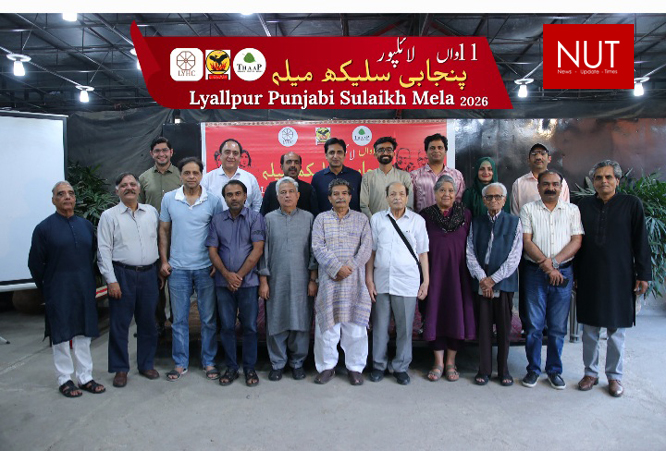
The 11th Lyallpur Punjabi Sulaikh Mela, held online on April 5 and 6, 2026, set a new benchmark for digital cultural engagement for festivals, with Thaap playing a central role in organizing and hosting the festival amid austerity measures and the prevailing energy crisis. Despite the absence of a physical audience, the festival witnessed an unprecedented response, with more than 20,000 participants connecting digitally, far exceeding the usual attendance of around 2,000 people.
The mela was jointly organized by Lyallpur Punjabi Sulaikh Mela, Lyallpur Young Historians Club (LYHC), and Thaap. To ensure smooth execution, a special studio facility was established at the Thaap Lahore office, enabling scholars, speakers, and chairpersons to participate seamlessly in the sessions, reflecting Thaap’s commitment to promoting cultural dialogue through innovative platforms.
The event began with the inaugural address by Dr. Tohid Chattha, followed by the presidential address by Prof. Parvez Vandal, while the opening featured Heer Waris Shah, setting a culturally rich tone for the proceedings.
A diverse range of sessions highlighted key literary, cultural, and contemporary issues. The first session discussed the book “Patna Di Taru” by Samina Asma. Another significant session titled “Celebrating Peace” explored the concept of peace in a conflict-ridden world and reflected on Punjab’s perspective on harmony and coexistence. The panellists included Dr. Yaqoob Bangash, Dr. Imdad Hussain and Iqbal Qaisar.
A session on Contemporary Punjabi Literature featured noted scholars and writers, including Nain Sukh, Zubair Ahmad, and Naseer Ahmad Naseer. A highly engaging discussion on Punjabi Language and Artificial Intelligence brought forward innovative ideas on preserving Punjabi oral traditions through modern technology. Ikram Jalla from Sahavi Studio and Dr. Abdul Aziz Malik emphasised that artificial intelligence can help preserve cultural legacy for future generations.
The festival also addressed pressing global concerns through a session on fast fashion and climate change, where Dr. Sajida Haider Vandal, Abdul Rehman and Prof. Shawana Khalil highlighted the environmental impact of the fashion industry.
An important academic discussion focused on the inclusion of Punjabi in school curricula, with participation from Iqbal Haider Bhatt, Prof. Aamir Zaheer Bhatti, and Dr. Parvaiz Vandal. Moderated by Ihtisham Kazim, the session explored practical ways to teach Punjabi to younger generations.
The concluding discussions also touched upon the Punjabi language movement and its political dimensions, underlining the importance of language in identity and cultural preservation. The panel included Aamir Riaz, Ahmad Raza, Mian Asif, Prof. Zaheer Wattoo and Dr. Tohid Chattha.
The successful digital transition of the Lyallpur Punjabi Sulaikh Mela marks a significant step towards the future of literary and cultural festivals, where audiences and speakers can connect beyond physical boundaries. The event not only facilitated knowledge-sharing but also fostered a deeper understanding of core cultural and societal issues in an inclusive and accessible manner.


