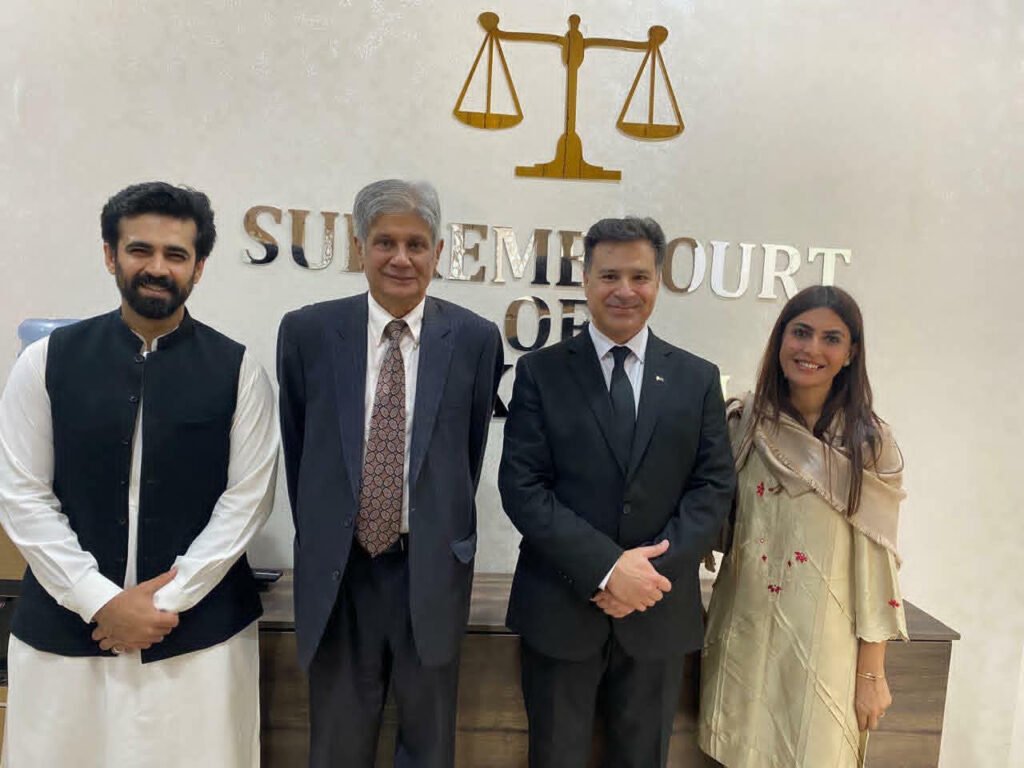






The Supreme Court of Pakistan today inaugurated a state-of-the-art Court Annexed Mediation Centre within its premises. Established with funding from the European Union in partnership with the United Nations Development Programme (UNDP), the Centre will provide litigants with access to mediation services under one roof, enabling them to pursue amicable, out-of-court settlements without unnecessary delay.
The establishment of the Supreme Court-Court Annexed Mediation Centre (SC-CAMC) marks a significant milestone in the promotion of Alternative Dispute Resolution (ADR) in Pakistan. Mediation offers a cost-effective, time-efficient and dignified pathway to justice, allowing parties to resolve disputes collaboratively while reducing the time and expense associated with prolonged litigation.
By providing an accessible and court-endorsed mediation mechanism, the SC-CAMC is expected to strengthen engagement between litigants and the judiciary and contribute to greater public confidence in the justice system.
The Centre will provide parties with a structured mediation process supported by accredited mediators and fully trained SC-CAMC staff. Services will cover the entire mediation cycle, from case intake and coordination to the preparation of a final settlement agreement or mediation report, as required.
The inauguration ceremony was attended by the Chief Justice of Pakistan; members of the Supreme Court ADR Committee—Justice Shahid Waheed, Justice Shafi Siddiqui and Justice Miangul Hassan Aurangzeb; accredited mediators; senior lawyers; and representatives of the Legal Aid Society (LAS).
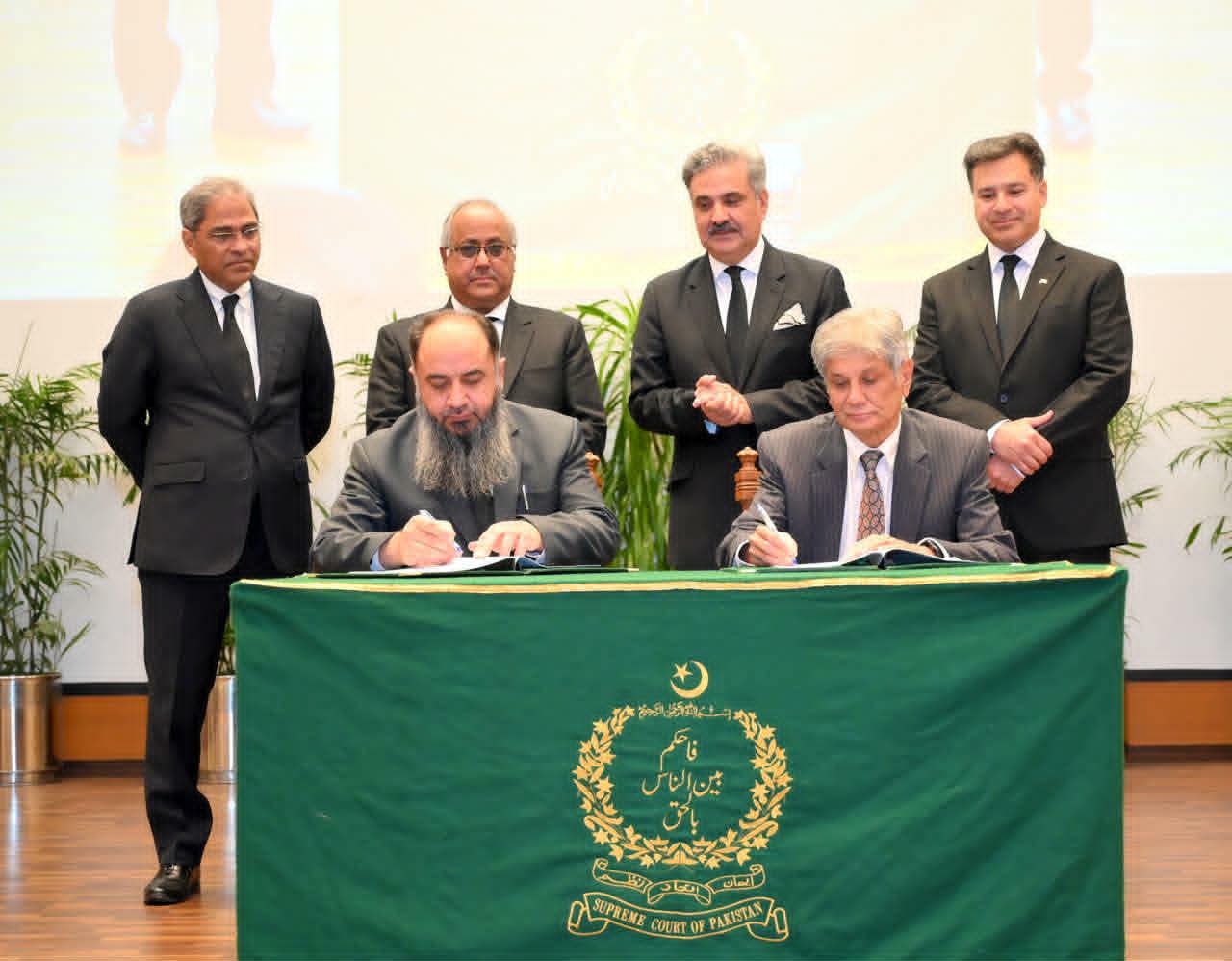
During the ceremony, a Memorandum of Understanding was signed between the Supreme Court of Pakistan and the Legal Aid Society. The MoU was signed by Justice Shahid Waheed on behalf of the Supreme Court and Justice (Retd.) Ather Saeed on behalf of LAS.
Under the four-month engagement, LAS will support the operationalisation of the Centre by:
• Managing cases referred for mediation by judges of the Supreme Court;
• Developing and deploying a case-management system and standard operating procedures (SOPs);
• Training Supreme Court staff in mediation case management;
• Training 24 Supreme Court officials as IMI-accredited mediators through MICADR; and
• Handing over a fully functional Court-Annexed Mediation Centre to the Supreme Court.
The Legal Aid Society expressed its appreciation to the Supreme Court of Pakistan for entrusting it with the management of this flagship initiative.
The SC-CAMC represents an important step towards embedding mediation within Pakistan’s formal justice system and expanding access to efficient, collaborative and sustainable dispute-resolution mechanisms.