




Pakistan’s fast-evolving SUV market is beginning to see a new layer of competition — not just between brands, but within the same global automotive groups.
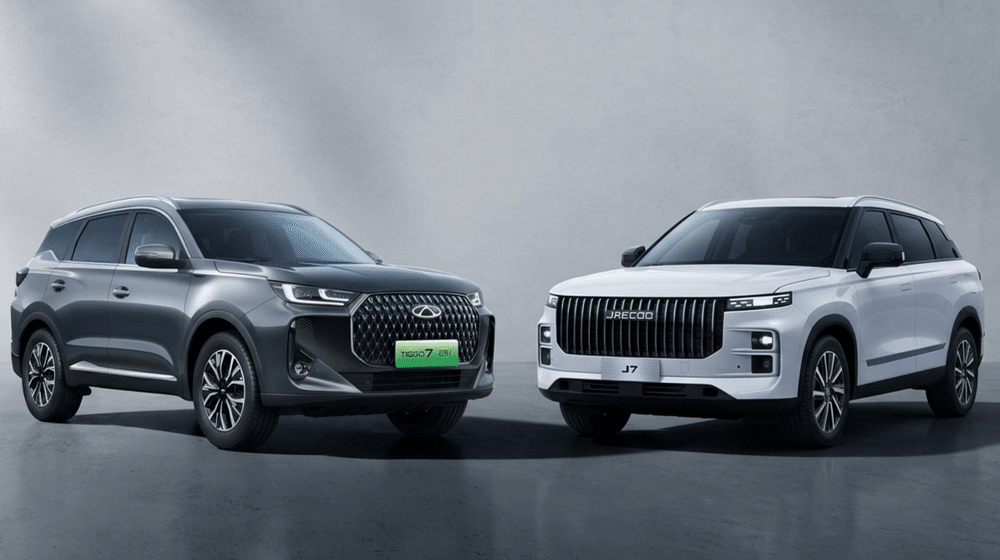
A case in point is the comparison emerging between the Chery Tiggo 7 PHEV and the Jaecoo J7 two different brands under the umbrella of Chery, a Chinese automobile giant.
At first glance, the two vehicles appear to target similar buyers — modern SUV customers looking for electrification, performance, and technology.
But a closer look reveals a more nuanced reality as both vehicles are built on closely related platforms, share core engineering, and deliver near-identical hybrid performance — yet are priced differently in the Pakistani market, almost 1 million rupees difference.
The Tiggo 7 PHEV enters as a C-segment plug-in hybrid built on Chery’s latest Super Hybrid architecture. It combines a 1.5TGDI engine with an 18.3 kWh battery and a dedicated hybrid transmission, producing strong power output and delivering up to 90 km of pure electric range and a combined range of around 1,200 km.
These are numbers that place it firmly among the most capable electrified SUVs currently available locally.
The Jaecoo J7, meanwhile, is part of Chery’s newer sub-brand strategy aimed at more design-led and lifestyle-oriented positioning. While it introduces a distinct exterior identity — more rugged, upright, and off-road inspired — its underlying engineering DNA remains closely aligned with Chery’s existing hybrid platforms.
This is not unusual in the global auto industry. Shared platforms across different brands — often referred to as “badge engineering” — are common practice.


