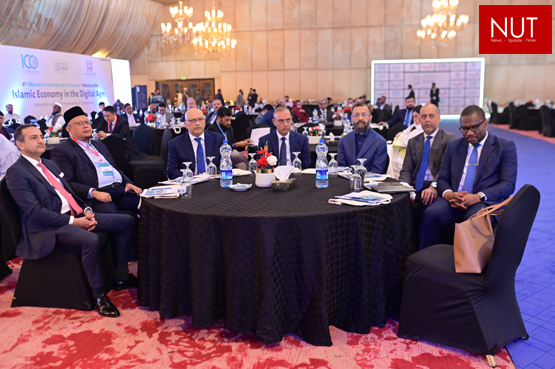





Titled “Islamic Economy in the Digital Age: Innovation within the Framework of Compliance,” the 6th AlBaraka Forum Regional Conference was held at the Pearl Continental Hotel in Karachi, bringing together senior policymakers, financial leaders, scholars, regulators, and industry experts to examine the rapid transformation of the digital economy and its alignment with the principles of Islamic finance.
Organized by the AlBaraka Forum for Islamic Economy, in collaboration with the Islamic Chamber of Commerce and Development, the conference provided a high-level platform for strategic dialogue on digital transformation, financial innovation, and institutional governance within the Islamic economy.
Addressing the conference, H.E. Mr. Jameel Ahmad, Governor of the State Bank of Pakistan, highlighted the magnitude of change reshaping global finance, stating:
“The global financial system is going through a major transformation. Instant payment platforms, evolving distribution models, and artificial intelligence are no longer theoretical concepts—they are now operational realities. Today, more than 70 % of people worldwide use some form of digital financial system, while over 80 % are willing to shift, clearly reflecting a fundamental change in consumer behavior and expectations.”
The conference featured comprehensive panel discussions on Digital Islamic Banking, the Future of Islamic Investment, Shari’ah Compliance and Governance, Waqf and Zakah, Digital Disruption, and Pakistan’s strategic position as a leading Islamic economy in Asia.
In his opening remarks, Mr. Yousef Hassan Khalawi, Secretary General of the AlBaraka Forum for Islamic Economy, emphasized the strategic importance of aligning digital innovation with Islamic finance principles, stating:
“If Islamic finance effectively facilitates the digital economy within Islamic banking, it will progress in parallel with conventional banking. Both systems are entering the digital era at the same time, and the real differentiator will be how innovation is governed and aligned with values, compliance, and institutional integrity.”
In a second statement reflecting the Forum’s research-based outlook and the themes highlighted in the conference documentary, Mr. Khalawi added:
“The challenge today is no longer whether the Islamic economy can be digitalized, but how this transformation is managed. Sustainable digital Islamic finance requires strong institutional frameworks and the active engagement of scholars, regulators, and industry leaders to ensure that innovation remains aligned with Shari’ah objectives and long-term economic stability.”
During the conference, H.E. Mr. Jameel Ahmad was presented with an AlBaraka Forum for Islamic Economy Honorary Trophy, handed over by the Secretary General of the Forum, in recognition of his leadership and contributions to advancing Pakistan’s financial and regulatory landscape.
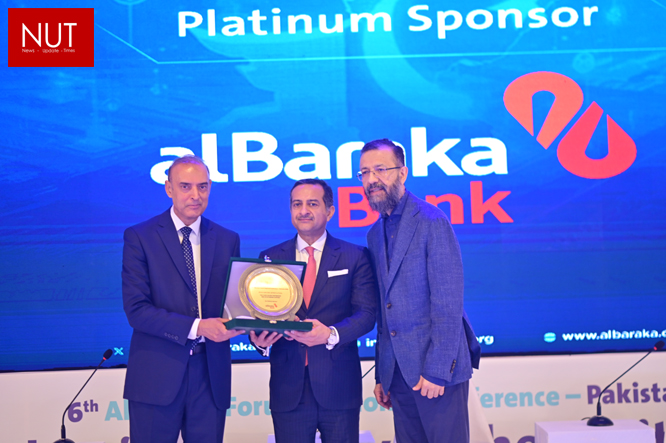
The Governor of the State Bank of Pakistan and the Secretary General of the AlBaraka Forum also presented an honorary commemorative trophy to AlBaraka Bank Pakistan in recognition of its role as the Platinum Sponsor of the conference. The trophy was received by Mr. Muhammad Atif Hanif, Chief Executive Officer of AlBaraka Bank Pakistan, who remarked:
“Pakistan’s banking sector continues to make steady progress. By integrating digital solutions with the principles of the Islamic economy and Shari’ah compliance, we are able to engage broader segments of society through a more inclusive, accessible, and trusted financial system.”
The conference also premiered a documentary produced by the AlBaraka Forum for Islamic Economy titled “Islamic Economy and the Advancement of Digitalization Across Asia – The Pakistan Experience,” offering an in-depth perspective on Pakistan’s evolving role in shaping the digital Islamic economy across the region, with a focus on financial inclusion, digital innovation, and institutional frameworks.
The conference concluded with clear and forward-looking outcomes, including the call for establishing a transparent and integrated framework for digital Islamic banking, strengthening coordination among banks, Shari’ah boards, and financial regulators, and reinforcing Pakistan’s position as a regional reference model for a stable, inclusive, and institutionally governed digital Islamic economy.
The Conference witnessed the participation and contributions of a distinguished group of senior leaders, regulators, and scholars, including H.E. Mr. Zafar Masud, Chairman of the Pakistan Banks’ Association and President & Chief Executive Officer of The Bank of Punjab; H.E. Mr. Muhammad Nassir Salim, President and Chief Executive Officer of HBL – Habib Bank Limited; Mr. Mohammad Shoaib, Chief Executive Officer of Lucky Investments Limited; H.E. Mufti Dr. Irshad Ahmad Aijaz, Chairman of the Shari’ah Advisory Committee at the State Bank of Pakistan; and H.E. Dr. Umar A. Oseni, Secretary General of the Organization of Islamic Cooperation (OIC) Arbitration Centre—further underscoring the conference’s high-level institutional, regulatory, and scholarly significance.